ENG
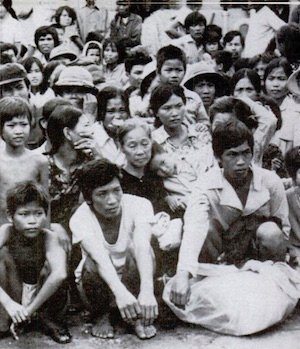
German novelist Heinrich Böll described the modern era as “the century of refugees and prisoners,” reflecting the vast displacement affecting 16 million people worldwide. The United Nations High Commissioner for Refugees (UNHCR) was awarded the Nobel Peace Prize in 1981 for the second time, highlighting the growing refugee crisis compared to the post-World War II period when it first won in 1954. Karl L. Stumpf, past president of the Rotary Club of Kowloon and 1980 Hong Kong Citizen of the Year, addressed this crisis, focusing on Hong Kong’s refugee camps. In his speech, he called on Rotarians to increase support for “boat people,” emphasizing the prolonged suffering while awaiting resettlement and the need for humanitarian aid and new homes.
PTG
O romancista alemão Heinrich Böll descreveu a era moderna como “o século dos refugiados e prisioneiros”, refletindo o vasto deslocamento que afeta 16 milhões de pessoas no mundo todo. O Alto Comissariado das Nações Unidas para os Refugiados (ACNUR) recebeu o Prêmio Nobel da Paz em 1981 pela segunda vez, destacando a crescente crise de refugiados em comparação ao período pós-Segunda Guerra Mundial, quando ganhou pela primeira vez em 1954. Karl L. Stumpf, ex-presidente do Rotary Club de Kowloon e Cidadão do Ano de Hong Kong em 1980, abordou essa crise, focando nos campos de refugiados em Hong Kong. Em seu discurso, pediu aos rotarianos que aumentassem o apoio aos “boat people”, ressaltando o sofrimento prolongado durante a espera por reassentamento e a necessidade de ajuda humanitária e novas moradias.
中文
德国作家海因里希·伯尔将现代称为“难民与囚犯的世纪”,反映了全球约1600万难民面临的大规模流离失所。联合国难民事务高级专员公署(UNHCR)于1981年第二次获得诺贝尔和平奖,这标志着与二战后首次获奖(1954年)相比,难民危机愈加严峻。九龙扶轮社前社长、1980年香港年度公民奖得主卡尔·斯坦普夫关注难民全球问题,尤其是香港的多个难民营。他在演讲中呼吁扶轮社成员加大对“越南船民”的援助,强调难民等待重新安置的漫长痛苦,呼吁帮助他们找到新家园和提供人道援助。

 Reverend-Karl-Ludwig-Stumpf-施同福牧師.pdf