The Hon. John Louis Marden (Hong Kong) 馬登(香港)
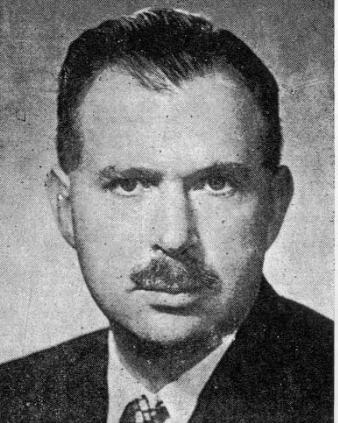
John Louis Marden, CBE, JP
The 8th Governor of Rotary International District 345
by Herbert K. Lau (劉敬恒) (Rotary China Historian)
1 July 2022
The Honourable John Louis Marden ( 馬 登 太 平 紳 士 ), CBE, JP (12 February 1919,
England – 18 March 1999, Hong Kong) enjoyed many Rotary activities offered to boys when
his father“Gem” George Ernest Marden was a member and later President 1928-1929 of
Shanghai Rotary Club (上海扶輪社) in the Republic of China (中華民國). Gem later served
Rotary International as Governor 1949-1950 of the 57th District (South China, Hong Kong,
and Macao), and then Director in 1951-1952.
Following his father’s road to Rotary, John L. Marden joined the Rotary Club of Hong
Kong (香港扶輪社) and served as its President in 1964-1965. Two years later, he was elected
the 8th Governor of District 345 of Rotary International in 1967-1968 with the global theme:
[Make Your Rotary Membership Effective 發揮你們扶輪的效能]. The District 345 territory
then was compiled with (1) The Republic of China (Taiwan); (2) British Crown Colony Hong
Kong; and (3) Portuguese Territory Macao.
John Louis Marden was a British-born Hong Kong businessman and philanthropist
recognized as one of the final great British taipans, leading the family conglomerate Wheelock
Marden & Co., Ltd. (會德豐馬登股份有限公司) as chairman from 1959 until his retirement in
1985. He had been appointed to serve as Unofficial Member of the Legislative Council (立
法局) in 1971 but of a very short tenure of only 2 weeks from August 4th to August 18th.
Born in England to George Ernest Marden, a former Chinese Maritime Customs Officer
turned entrepreneur, and Dorothy Scales, he relocated to Shanghai (上海) as an infant and
received early education there before attending schools in England and studying law at
Trinity College, Cambridge, from 1937 to 1940. Joining the family firm in Hong Kong in
1947 after commercial training in Liverpool and London, Marden expanded its operations
beyond shipping into property development, retailing via subsidiaries like Lane Crawford (連
卡佛), while serving on boards including the Hongkong & Shanghai Banking Corporation (香
港上海滙豐銀行), Dairy Farm (牛奶公司), Hongkong Electric (香港電燈), and the Cross-
Harbour Tunnel (海底隧道) project, which he helped drive to completion in 1972.
His tenure ended amid a protracted corporate struggle, culminating in the 1985 sale of
his stake to shipping magnate Sir Y. K. Pao (包玉剛爵士), which shifted control of Wheelock
Marden away from British hongs in a pivotal moment for Hong Kong’s business landscape.
Post-retirement, Marden focused on philanthropy through the Marden Foundation, co-
established with his wife Anne Harris—whom he married before relocating to Hong Kong—
funding over a dozen pre-vocational schools, a swimming pool at Hong Kong Island School,
and other educational initiatives. He was appointed Commander of the Most Excellent
Order of the British Empire (CBE) in 1976 by Queen Elizabeth II, United Kingdom, for his
contributions to commerce. As appointed a Justice of the Peace in 1959, Marden extended
his influence into community leadership.
Rotarian John Louis Marden, who had one son and three daughters, passed away at his
home in Shek O (石澳), leaving a legacy as a bridge between colonial-era entrepreneurship
and Hong Kong’s evolving economy.
1-5 June 1958, the 49th Annual Convention of Rotary International held at Texas, Dallas,
U.S.A. — John L. Marden (Right 1) served as Chairman of the 150-man Vocational Meeting
on the World of Finance Talk Shop. Chatting with him at the main vault of the
Federal Reserve Bank of Dallas were Rotarians (from left): W. D. Gentry, Dallas;
Elmer J. Daniels, Pocomo Mountains, Pennsylvania; Lois J. Arnold, Danville, Indiana.
The Story of John Louis Marden
Early Life and Education
John Louis Marden was born on 12 February 1919 in Woodford, Essex, England, to
George Ernest Marden and Dorothy Scales, who had married in 1916. His father, born on 3
July 1892 in England to a naturalized British family of German extraction, initially worked as
an officer and headmaster in the Chinese Maritime Customs Service (中華民國海關總稅務司
署) in Canton (Guangzhou) (廣州) and Shanghai (上海) before transitioning to business
ventures, including founding G. E. Marden & Co., Ltd. in 1925.
Shortly after his birth in 1919, the family relocated to Shanghai, settling in the
International Settlement (上海公共租界) where his father resumed professional activities.
He spent his early childhood there. The family later moved to the British Crown Colony
Hong Kong, where Marden’s father merged his firm with Wheelock & Co. in 1932 and became
its chairman.
His early elementary education took place at the Cathedral School (座堂男校/英童公學)
affiliated with Holy Trinity Cathedral (聖三一座堂) in the Shanghai International Settlement,
exposing him to an international expatriate community amid the bustling commercial
environment of pre-War China.
In 1931, Marden returned to England for secondary education at Gresham’s School in
Holt, Norfolk, a public school known for fostering independent thinking and outdoor pursuits,
which aligned with the era’s emphasis on character-building for future leaders in empire-
related trades. He then proceeded to the University of Cambridge, attending Trinity College
from 1937 to 1940, where he studied law, though his studies were likely influenced by the
outbreak of World War II in 1939.
Marden’s early influences were profoundly shaped by his father, George Ernest Marden,
a First World War fighter pilot turned entrepreneur who established a shipping and trading
firm in Shanghai, instilling in him a practical orientation toward international commerce and
risk management in volatile markets. Additionally, his father’s leadership as president of
the Shanghai Rotary Club (1928–1929) introduced young Marden to Rotary activities,
fostering values of service, networking, and ethical business practices that later defined his
civic engagements. This familial immersion in expatriate business circles and voluntary
organizations provided a foundational blend of formal academic training and real-world
mercantile realism, preparing him for entry into the family enterprise post-War.
Undisputedly the most modern and technologically-advanced Chinese city in the 1930s,
Shanghai was a seductive concoction of glamour and sin, prompting some to call it the “Paris
of the East” and was the fifth largest city in the world with 3 million in population.
Business Career
Entry into Family Business
Following World War II service in the Royal Horse Artillery, seeing action in North Africa
and the D-Day landings, John Louis Marden joined his father’s firm, G. E. Marden & Co., Ltd.
in 1946 as a trainee in the secretarial and shipping division before transferring to the
insurance department. His prior commercial training included time with the Blue Funnel
Line in Liverpool and his father’s London office, providing foundational exposure to shipping
and trade operations central to the family enterprise. This entry marked his immersion into
the business established by his father, George Ernest Marden, who had founded G. E. Marden
& Co. in Shanghai in 1925 and merged it with Wheelock & Co. in 1932 to form a key player in
shipping, lighterage, and related services.
In 1947, Marden relocated to Hong Kong with his wife, Anne Harris, to deepen his
involvement in the family’s operations, coinciding with the firm’s post-War re-establishment
amid geopolitical shifts from Shanghai. The move aligned with the broader transition of
British hongs to Hong Kong following the Chinese Civil War, where Wheelock Marden
expanded property investments alongside its core shipping interests under family oversight.
By 1952, Marden had advanced to director, reflecting his growing operational role in a firm
then chaired by his father. This progression underscored the intergenerational continuity
of the Marden enterprise, built on George Ernest Marden’s expertise from the Chinese
Maritime Customs and early 20th-century trading networks.
Leadership of Wheelock Marden and Key Expansions
John Louis Marden assumed chairmanship of Wheelock Marden & Co., Ltd. in 1959,
succeeding his father George Ernest Marden upon the latter’s retirement to London at age 67.
Under his leadership, the firm, originally rooted in shipping and trading since its founding in
Shanghai, underwent a strategic pivot toward property investment as its core activity,
eclipsing traditional maritime operations amid Hong Kong’s post-War economic expansion.
This shift capitalized on rising land values and urbanization, with Marden directing resources
into real estate development and holdings, including acquisitions like Realty Development
Corporation Limited (聯邦地產有限公司), to drive long-term growth.
A pivotal expansion was Marden’s instrumental role in spearheading the Cross-Harbour
Tunnel project, Hong Kong’s first underwater road link between Kowloon and Hong Kong
Island, which opened to traffic on 2 August 1972 after construction began in 1969. As a key
proponent through Wheelock Marden’s involvement, Marden advocated for the Tunnel to
alleviate traffic congestion and foster economic integration across the harbour, securing
government concessions and private financing that positioned the Company as a major
infrastructure player. The project, costing approximately HK$280 million, handled over
90,000 vehicles daily by its early years, underscoring its immediate impact on urban mobility.
5
Marden further diversified Wheelock Marden’s portfolio beyond property and shipping,
holding directorships in entities such as The Hongkong & China Gas Co., Ltd. (香港中華煤氣
有限公司.) and Hongkong Realty & Trust Co., Ltd. (香港置業信託有限公司), which facilitated
entry into utilities and additional real estate ventures during the 1960s and 1970s. These
moves reflected a broader strategy of leveraging Hong Kong’s boom to build a conglomerate-
like structure, though specific acquisition details remain sparse in records, emphasizing
organic growth and strategic investments over aggressive takeovers. By the mid-1980s, the
Company’s expanded footprint contributed to its attractiveness in takeover bids, culminating
in Marden’s 1985 sale of his controlling stake to shipping magnate Sir Yue-Kong Pao (包玉剛
爵士) following a contentious control dispute. This period marked Wheelock Marden’s
transformation into a diversified British hongs exemplar under Marden’s stewardship.
Diversification into Other Sectors
Under John Louis Marden’s chairmanship of Wheelock Marden from 1959 to 1985, the
Company pursued diversification beyond its core shipping, lighterage, and related logistics
activities, with property investment emerging as a pivotal expansion, including retailing
through subsidiaries like Lane Crawford ( 連 卡 佛 ). This shift elevated property to a
dominant sector within the group, surpassing shipping in strategic importance by leveraging
Hong Kong’s post-War economic boom and urban growth.
A key initiative in this diversification was the Company’s stake in infrastructure
development, particularly through Cross-Harbour (Holdings) Ltd. ( 香 港 隧 道有 限 公 司 ),
formed in 1965 with Wheelock Marden as a major founding shareholder alongside partners
like Hutchinson International Ltd. (和記國際有限公司) and Kwong Wan Ltd. (廣萬有限公司).
This consortium secured a franchise to build and operate Hong Kong’s first cross-harbour
road tunnel, connecting Kowloon to Hong Kong Island, which commenced construction in
1969 and opened to traffic on 2 August 1972 after handling initial toll revenues projected at
HK$10 million annually. The project, costing approximately HK$280 million, not only
eased traffic congestion but also supported ancillary property opportunities by enhancing
connectivity for commercial and residential development.
These moves reflected Marden’s strategy to mitigate risks from volatile shipping markets
amid global competition and oil crises, though specific quantitative data on property portfolio
growth under his direct oversight remains limited in available records. By the mid-1980s,
such diversification had positioned Wheelock Marden as a more balanced conglomerate,
setting the stage for its later evolution into a property-focused entity following Marden’s sale
of control to Sir Y. K. Pao in 1985.
Sale of Family Interests and Retirement
In February 1985, John Louis Marden sold the family’s 13.5% voting stake in Wheelock
Marden to Malaysian banker Tan Sri Khoo Teck Puat (邱德拔) as part of Khoo’s HK$1.9
billion bid to acquire full control of the Company. This transaction, however, triggered a
6
rapid escalation when another major shareholder, Cheung Yuk-Leung (張玉良), who held
significant influence, learned of the deal on February 14th and transferred his family’s 34%
stake to Hong Kong shipping magnate Sir Y. K. Pao, citing a sense of betrayal by the Marden
family.
Pao, seeking to diversify beyond shipping after acquiring The Wharf in 1980, capitalized
on the opportunity by offering to buy out Wheelock at a 10% premium over Khoo’s bid,
securing victory when Khoo abandoned his pursuit. The overall acquisition by Pao totaled
HK$2.5 billion, marking the end of British family control over the conglomerate founded
through the 1932 merger of Wheelock and Marden interests. Marden stepped down as
chairman amid this contentious takeover battle, described as a fight for Hong Kong’s
corporate soul, which pitted local Chinese tycoons against foreign bidders.
The sale and subsequent loss of control culminated in Marden’s full retirement from
business in 1985, positioning him as the last of Hong Kong’s great British taipans—
pioneering expatriate entrepreneurs who dominated colonial-era trade and shipping. Post-
retirement, Marden shifted focus to philanthropy and civic roles, having divested the family’s
longstanding holdings in the firm originally built by his father, George Ernest Marden.
Philanthropy and Civic Engagement
Charitable Foundations and Donations
John Louis Marden co-founded the Marden Foundation in 1973 with his wife, Anne
Marden, to fund charitable initiatives in Hong Kong, with an emphasis on education and
support for vulnerable populations, including children with special educational needs. The
Foundation’s original mandate included financing pre-vocational training for adolescents
aged 12 to 15 who favored practical skills over academic paths, reflecting Marden’s interest in
practical opportunities amid Hong Kong’s post-war economic development.
A primary focus of the Foundation’s early donations was funding the construction of a
dozen pre-vocational schools across Hong Kong, including three pre-vocational secondary
schools in different regions, providing subsidized education and vocational programs to
underserved youth. One notable example is the Caritas Tuen Mun Marden Foundation
Secondary School ( 明 愛 屯 門 馬 登 基 金 中 學 ), which opened in September 1977 as a
government-aided institution funded by the Foundation to deliver vocational curricula.
These schools addressed skill gaps in the local workforce, contributing to Hong Kong’s
industrial growth by training students in trades such as manufacturing and services. The
Foundation also financed the swimming pool at Hong Kong Island School (英基港島中學).
Marden declared it open on 15 June 1973 by jumping in, fully clothed.
Beyond education, the Marden Foundation supported broader charitable efforts for
marginalized groups, including projects aiding children from disadvantaged backgrounds
and those requiring specialized educational interventions. While specific donation amounts
are not publicly detailed in available records, the Foundation’s work has been credited with
7
substantial long-term impact on social services in Hong Kong, as noted by contemporaries
like Sir David Akers-Jones (鍾逸傑爵士), who highlighted its “great contribution” to local
charity. Marden’s involvement emphasized targeted, outcome-oriented philanthropy
aligned with economic pragmatism rather than expansive welfare models.
Council of the Order of St. John in Hong Kong
Other than his service in Rotary International, Marden was appointed Chairman of
Council of the Order of St. John in Hong Kong (香港聖約翰理事會) from 1976 until 1987 by
Hong Kong Governor Sir Crawford Murray MacLehose (香港總督麥理浩爵士). He was the
fourth Rotarian from the Rotary Club of Hong Kong to hold such position.
The Council of the Order of St. John in Hong Kong was established in 1949, and was
officially incorporated on 29 June 1951 under the《Order of St. John Ordinance Chapter 1047》
《 聖 約 翰 榮 譽 團 條 例 》 in the Laws of Hong Kong. It was the governing body of the
Organization, responsible for policy making, fund raising, allocation of resources, and
providing support and co-ordination of the functions of the St. John Ambulance Association
(聖約翰救傷會) and Brigade (聖約翰救傷隊).
17 July 1977 — John L. Marden (center), Chairman of the Council of the Order of St. John in
Hong Kong, officiating at the opening ceremony of an ambulance station, accompanying by
Daniel Koo Shing-Cheung (left 1), President of the Mainland Area of the St. John
Ambulance Brigade. Daniel Koo Shing-Cheung (古勝祥) was later
President 1984-1985 of Hong Kong Island West Rotary Club (香港西區扶輪社).
8
Public Service Roles
In 1959, John Louis Marden was appointed by Hong Kong Governor Sir Robert Brown
Black (香港總督柏立基爵士) Unofficial Justice of the Peace for Hong Kong (非官守太平紳士)
(JP). This lifelong appointment was a role typically bestowed on prominent community
figures to assist in minor judicial and administrative functions, such as witnessing documents
and maintaining public order. The JP honorific underscored Marden’s status among Hong
Kong’s elite and extended his influence into community leadership, though it carried no
salary and emphasized voluntary public contribution over partisan governance.
Appointed by Hong Kong Governor Sir David Clive Crosbie Trench (香港總督戴麟趾爵
士), Marden served as an unofficial member of the Legislative Council of Hong Kong (香港立
法局非官守議員), on 4 August 1971 and serving until 18 August 1971, in a temporary capacity
representing business interests during the colonial era. This brief tenure aligned with
practices for filling interim vacancies among unofficial appointees, who provided non-
governmental perspectives on policy matters.
In 1976, Marden was appointed Commander of the Most Excellent Order of the British
Empire (C.B.E.) by Queen Elizabeth II, United Kingdom, in recognition to his remarkable
services to the Hong Kong community.
Beyond direct governmental roles, Marden chaired the Hong Kong Shipowners
Association (香港船東會) from 1978 to 1979, influencing maritime policy discussions with
colonial authorities on trade, shipping regulations, and economic development in the
Colony’s vital port sector. This leadership position bridged private enterprise and public
policy, advocating for industry needs amid Hong Kong’s role as a global shipping hub.
Family and Later Years
John Louis Marden married Anne Harris in 1947, and the couple relocated to Hong Kong
that year via Sunderland flying boat to join his father’s firm. They had four children—one
son and three daughters—all born in Hong Kong. (see family photo on Page 9)
Marden experienced declining health in the years leading up to his death, having been in
poor health for several years. He died at his home in Shek O, Hong Kong, on 18 March 1999,
at the age of 80.
Marden was survived by his wife, Anne, one son, and three daughters. In the immediate
aftermath, former acting governor Sir David Akers-Jones paid tribute to him as “the taipan
among the taipans”, praising the charitable impact of the Marden Foundation, which Marden
had established with his wife. No public funeral details were widely reported, reflecting his
preference for a low-profile personal life after retiring from business in 1985.
9
RotaryAnn Anne Harris Marden, MBE, BBS, JP
The couple founded the Marden Foundation (馬登基金) for the charity works in Hong
Kong. RotaryAnn Anne Marden was a dedicated philanthropist who, for over 7 decades, had
been committed to supporting education in Hong Kong and creating educational
opportunities for children with disabilities and from socially disadvantaged backgrounds.
In 1960, Anne was appointed Director of the Hong Kong Red Cross and led the building
and running of the Princess Alexandra Red Cross Residential School (香港紅十字會雅麗珊郡
主 學 校 ). During the 1970s, three Marden Foundation Schools were built, with Anne
working closely with Caritas and the then Education Department of the Government.
As a member of the Hong Kong Society for Rehabilitation (香港復康會), Anne worked to
establish the Rehabaid Centre and had remained as a Governing Committee member of the
Rehabaid Society (復康資源協會).
She was a Founding Member of two charitable organizations dedicated to supporting the
developmental well-being of children – TREATS and Playright Children’s Play Association
(智樂兒童遊樂協會). She was also the Honorary President of Playright.
10
At the University of Hong Kong (香港大學) (HKU), Anne actively and long-standing
supported the Faculty of Education. She funded an annual Marden Foundation Visiting
Fellowship in Education from 1991 to 2004, which brought distinguished visitors to HKU and
significantly enhanced their research and community profile. She was an esteemed friend
of the Faculty, and paid attendance at many Faculty functions, including the important
occasion of the Faculty’s 20th anniversary and its annual Graduation Ceremony.
In 2007, Anne was conferred an Honorary University Fellow by HKU.
Anne had been a Justice of the Peace for Hong Kong since 1973. Anne received the
Caltex Community Service Award in 1990. In recognition to her remarkable service to the
community, she was appointed in 1991 Member of the Most Excellent Order of the British
Empire (M.B.E.) by Queen Elizabeth II of the United Kingdom.
Anne was also deeply caring for the underprivileged, especially the marginalized groups,
in the society, and her passion and contribution towards the social development of Hong
Kong. Anne had been supporting Action for REACH OUT (AFRO) (青鳥) since early years,
as a member and the patron. AFRO was officially established in 1993. It is the first sex
workers’ support group in Hong Kong, a non-governmental and a charitable organization.
AFRO endeavours to offer adequate services and support to women working in the sex
industry in Hong Kong, including those who are from Hong Kong, Chinese Mainland,
Thailand, and the Philippines, etc.
Anne was conferred in 2006 Bronze Bauhinia Star by the Government of the Hong Kong
Special Administrative Region.
RotaryAnn Anne Harris Marden, MBE, BBS, JP, passed away at her home in Shek O,
Hong Kong, on 31 May 2022 at her age of 96.
11
Mrs. Anne Marden, Director of the British Red Cross Hong Kong Branch,
advocated for rights of children and marginalized groups. (Photo Courtesy of the Marden Family)
Mrs. Anne Marden, Director of the British Red Cross Hong Kong Branch,
lent helping hands to the refugee relief. (Photo Courtesy of the Marden Family)
12
Hong Kong philanthropist Anne Marden, who advocated for rights of
children and marginalised communities, dies aged 96
Marden was a pioneer in special needs education and served as
director of Hong Kong Red Cross in early 1960s
“Mrs. Marden dedicated her life to serving others and helped thousands of people with
special needs to lead a dignified and meaningful life,” city’s leader says.
Annemarie Evans / 1 Jun 2022
Hong Kong philanthropist Anne Marden, who was a key advocate for the rights of
children and marginalised communities, has died at the age of 96.
Marden, who was a pioneer in special needs education at a time when there were almost
no facilities for children and adults with disabilities, died on Tuesday in her home in Shek O.
In later years, she also gave financial support to the now-suspended Human Rights Press
Awards.
On Wednesday, Chief Executive Carrie Lam Cheng Yuet-ngor expressed deep sorrow
over the passing of Marden.
The city’s leader said in a statement that she had known Marden for over 20 years since
her days as the director of social welfare in the early 2000s and admired her passion and
dedication to improving the welfare of people, especially those with disabilities and
individuals from disadvantaged backgrounds.
“She was personally involved in many charities in Hong Kong for over half a century,
playing both leadership and advocacy roles,” Lam said.
“Mrs. Marden dedicated her life to serving others and helped thousands of people with
special needs to lead a dignified and meaningful life,” the chief executive said.
Born in Shanghai in 1926, Marden studied at Bristol University.
13
Her parents and those of her future husband were friends. She married John Marden
after he returned from his service during the Second World War, which included the
Normandy landings.
John Marden was the “taipan” of conglomerate Wheelock Marden & Co., Ltd, and Anne
came to Hong Kong as a young bride with her new husband in 1947.
During the late 1940s and 1950s, she would have four children before becoming active
in a number of causes, using her personal privilege and influence as the director of the Hong
Kong Red Cross in the early 1960s, providing immediate assistance to those affected by
squatter hut fires or natural disasters such as the devastating Typhoon Wanda in 1962.
In the same year, Marden oversaw the inauguration of Hong Kong’s first residential
school for children with disabilities. Based in the city, today it is known as the Princess
Alexandra Red Cross School. In 1973, she and husband John set up the Marden Foundation
as philanthropists.
“Anne was definitely one of the heroes in Hong Kong’s social services field,” said
Rosanna Wong Yick-ming, patron of the Playright Children’s Play Association which
Marden helped to found in 1987.
“Anne listened humbly with an open mind to people’s views. She was never loud,
complaining or critical,” Wong said.
“She was soft and mild but persistent. She talked to people and influenced them –
which I think is sometimes even more powerful.”
The association’s executive director Kathy Wong Kin-ho also tells of how Marden
oversaw the first inclusive playground for special needs children in King’s Park in the late
1980s. Her work with Playright also involved international conferences where she pushed
the importance of play for children at a global level.
The organisations in which she had a role included the Hong Kong Federation of
Handicapped Youth, the Rehabaid Society for people with physical disabilities and special
needs and the Hong Kong branch of International Social Service assisting migrants, divided
families, asylum seekers and refugees, among others.
She was a co-founder of TREATS bringing together children with different abilities and
backgrounds, and honorary president of Playright.
Marden is survived by four children, 10 grandchildren and 14 great grandchildren.
